
By Thomas O’Neil
“Louie Louie” is recognizable to most people. Maybe you’ve heard it sung at a baseball game, covered by your local bar band, or maybe you’ve heard a Jewish parody version of it about the Exodus story made for kids. Regardless, the song is still relevant, which is amazing considering that many other hit songs from the 60s aren’t. (Anyone ever heard of “Sugar Shack” by Jimmy Gilmer and the Fireballs? I thought not.) The “Louie Louie” story is long and complicated (and really interesting) but I’ll present a somewhat shortened history of the song, and I’ll explain how Tacoma, the City of Destiny herself, helped shape the future of the song.
Part I: Richard Berry
The first version of “Louie Louie” was written by a doo-wop singer named Richard Berry in 1955. This was not Berry’s first foray into music. He had already contributed uncredited vocals to Etta James’s song “Roll with Me, Henry” back in 1954, but Mr. Berry wanted to start releasing songs in his own right.
Richard Berry based Louie Louie loosely off of the song “El Loco Cha Cha,” a latin tune with a catchy rhythm. He then added elements of calypso and rhythm and blues, and new lyrics, of course to create his song. The exact meaning of the lyrics are unclear (something that will become incredibly important later), but the song seems to involve a man longing for his lover, while on a boat.
Richard Berry released the song (as the B-side to his cover of “You Are My Sunshine”) in March of 1957 on Flip Records, a rhythm and blues label based in Los Angeles. The single seemed bound to make no impact until popular Los Angeles DJ Hunter Hancock began playing “Louie Louie.” Hancock was known for playing Black records for a predominately white audience, which meant that “Louie Louie” had a fanbase among many young white kids–something I doubt Mr. Berry expected.
The tragic thing about the situation is that in 1959, he sold the rights to the song to his label Flip for $750 (which is over $8000, adjusted for inflation). This seemed like a good decision then, as no one expected the song to become as big as it ended up being, but this would later come to haunt him, as the song would blow up soon after its sale. By the 1980s, Berry was on welfare, and it seemed that he was destined to make no money off the song. That changed in 1992 when he regained the rights to “Louie Louie” and got a $2,000,000 check. He spent the last few years of his life performing in the Los Angeles area before his death from heart failure in 1997 at the age of 61.
Before I move on from Richard Berry, one last little tidbit. He did write a few more songs, including “Have Love Will Travel” which would later be covered by Tacoma’s the Sonics on their 1965 debut Here are the Sonics, and became a popular garage rock cover song in its own right–just an interesting bonus fact.
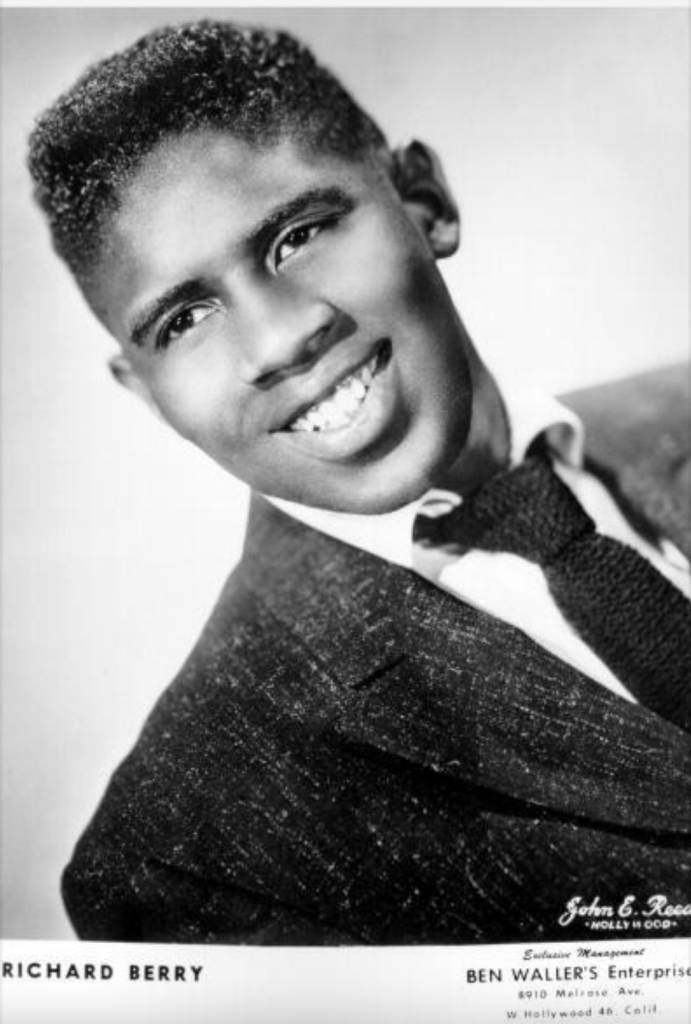
Richard Berry, the original singer of “Louie Louie”
Part II: The Wailers
How “Louie Louie” came to the Pacific Northwest is a little unclear. The first Northwest band to cover “Louie Louie” seems to be the Playboys, a Seattle Rock and Roll group from the 50s and 60s, but they did not release any recorded versions of the song. Little Bill and the Blue Notes, often called Tacoma’s first rock band, also would play the song live. In fact, they played a half hour version of it once and it got them banned from performing in Tacoma by the Tacoma City Council (back when City Councils could do stuff like that). It wasn’t until another Tacoma band called the Wailers (not to be confused with Bob Marley’s band) released it as a single that the song would be irrevocably tied to the Pacific Northwest.
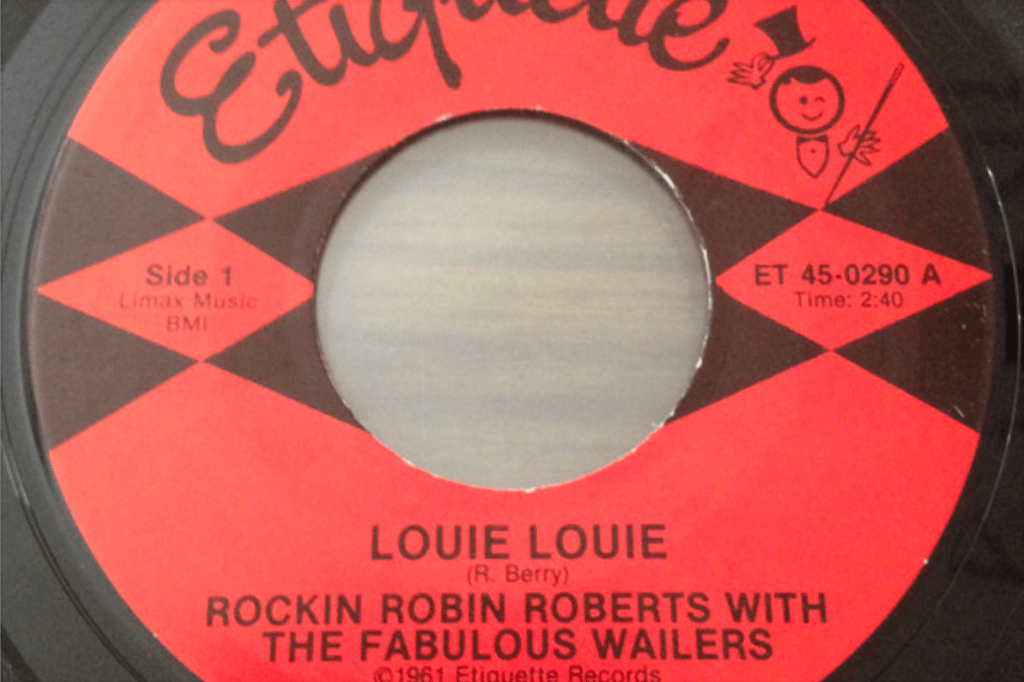
In 1961, the Wailers would release their version of “Louie Louie.” On lead vocals was Rockin’ Robin Roberts (UPS ‘64), formerly of Little Bill and the Blue Notes. The Wailers’ version of “Louie Louie” was quite a bit different than Richard Berry’s version. The doo-wop and calypso elements were removed and a rocking guitar solo played by Rich Dangel was added. Roberts’s belting vocals also stand out. The single is an early example of what would later be called “garage rock;” relatively simple songs played loudly released on small labels with little production. The Wailers would release “Louie Louie” as their first single on their own label, Etiquette Records, in March of 1961. The song was not a huge hit nationwide, but it was popular in the Northwest.
Unfortunately, Rockin Robin Roberts’s story was also filled with tragedy. He had been attending the University of Puget Sound (Go Loggers!) throughout his time in the Wailers, and was a member of the now defunct UPS Chapter of the Sigma Nu Fraternity. He left the Wailers in 1962 to pursue his scientific studies and graduated in 1964 from UPS. He then graduated from Oregon State University with a Master’s in Biochemistry in 1967 and worked in San Francisco as a chemist. He briefly reunited with the Wailers in 1966 to release the single “You Weren’t Using Your Head.” Sadly, on December 22, 1967, he was killed in a car crash near San Mateo, CA. He was 27.
The Wailers’s version of “Louie Louie” became popular in the Northwest, partially due to frequent airplay by popular Seattle DJ Pat O’Day. Paul Revere and the Raiders, formerly based in Boise, but based in Portland by 1963, recorded a version of the song. They had previously had some chart success with their 1960 Instrumental “Like, Long Hair,” and were known for their goofy costumes. They ended up being picked up by major label Columbia Records through which they released their version of “Louie Louie” on Columbia Records on June 11, 1963. Even though the song did well in Portland and San Francisco, it lagged nationwide, due to poor distribution on behalf of Columbia Records. The band would later find success in 1965 with a series of hit albums and even had a #1 hit single in 1971 with “Indian Reservation.”
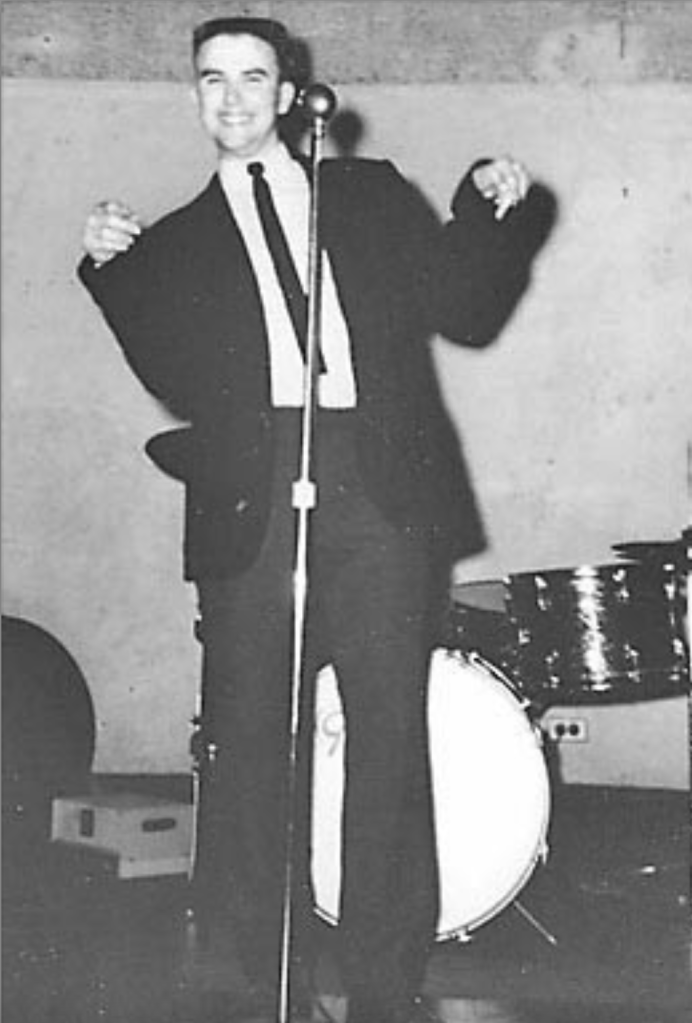
Rockin’ Robin Roberts, UPS alumnus and man responsible for bringing “Louie Louie” to Northwest Audiences
Part III: The Kingsmen (and Beyond!)
The most famous version of Louie Louie though, comes from the Kingsmen. The Kingsmen, from Portland, had been playing rowdy garage rock and rhythm and blues since 1959 and wanted to start releasing material. They went to Northwestern Inc. in Portland and recorded their version on April 6, 1963. This was coincidentally the same studio where Paul Revere and the Raiders would record their version a few days later. The recording cost either $36 or $50 (sources vary), which the band split evenly.
The recording is a mess. Lead singer Jack Ely is unintelligible, due to the fact that the one microphone setup meant that he had to shout into a mic hanging above him, and also that he had braces, which altered his enunciation. At the 54 second mark, drummer Lynn Easton yells “f*ck” after dropping his stick. Surprisingly no radio stations noticed this (which is ironic considering the song was subject to an FBI investigation, more on that later). After the guitar solo, played by Mike Mitchell, lead singer Jack Ely, accidentally comes in two measures early, before stopping himself, a mistake that is left in the recording, showing the pure sloppiness of the recording.
Despite (or perhaps because) of all the sloppiness, the song was a massive hit. “Louie Louie” reached #2 on the Billboard Hot 100 in 1963, becoming the Kingsmen’s highest charting song. The song is by far the most famous version of “Louie Louie” and swarms of young bands began playing their own versions of them. Despite incoming Beatlemania, which acted as a musical extinction event for many bands and genres, “Louie Louie” still persisted. British rockers The Kinks would cover the song in 1964, which likely helped it gain attention in British musical consciousness. The song would be covered by bands as varied as the Beach Boys (Pop Rock), Black Flag (hardcore), Motorhead (metal), Fat Boys (hip hop), and Ike and Tina Turner (Rhythm and Blues). Pretty remarkable! In fact, the song remains the second most covered song of all time, the first being “Yesterday” by the Beatles. (Although I do wonder if “Wonderwall” will surpass both in the upcoming years)
As the song blew up, hostilities appeared in the band. The drummer, Lynn Easton, had secretly acquired the rights to the band’s name. One day, he staged a hostile takeover and made himself the lead singer of the band, forcing Jack Ely out. Ely quit the band and formed his own rival Kingsmen. In the meantime, Easton continued touring with his Kingsmen and would lip sync “Louie Louie.” A court ruling eventually required Jack Ely quit using the Kingsmen name, while Easton had to quit lip synching and Jack Ely was credited on all future releases of “Louie Louie.” The Kingsmen broke up in 1968.
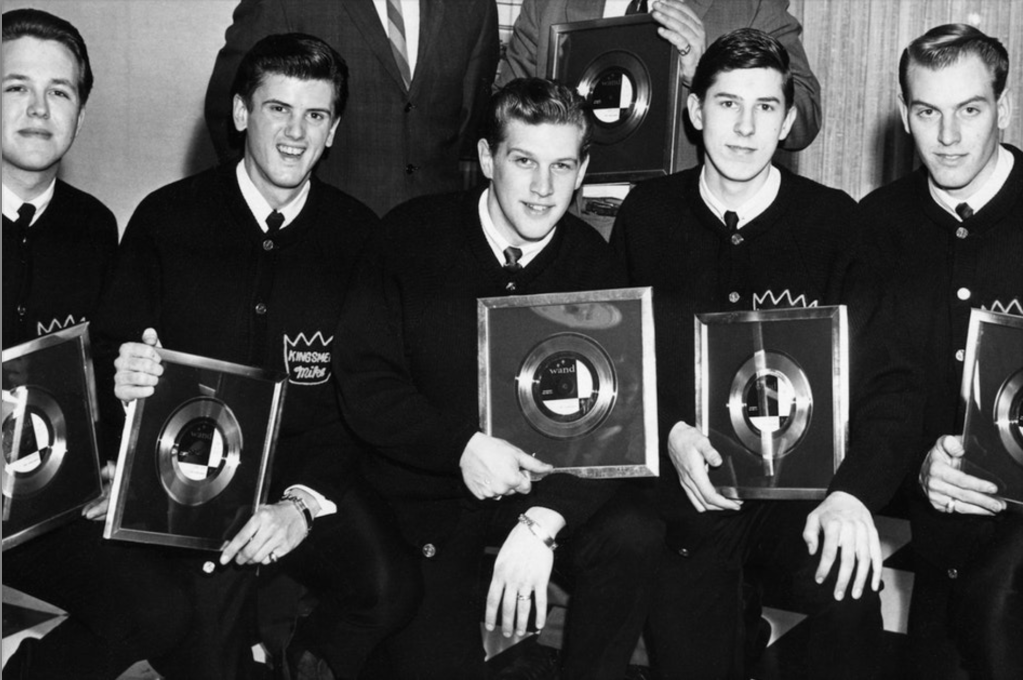
The Kingsmen, who made the most famous version of “Louie Louie”, holding their Gold Records
Part IV: Uh-Oh! Here comes the Government!
Music censorship has been around for a long time. For example in 1957, the song “Wake Up Little Susie” was banned by some radio stations for its supposedly suggestive lyrics. In 1958, an instrumental called “Rumble” by pioneering guitarist Link Wray was banned by some radio stations due to fear that the song glorified “juvenile delinquency.” The reaction to “Louie Louie” went much further.
The unintelligible lyrics of the song led to many people trying to figure out what was being said. Most people didn’t have access to the actual lyrics, and very few people had heard Richard Berry’s version of the song, so their first exposure to the song was the Kingsmen’s version. Many people claimed that the lyrics were dirty and people would pass around the “true lyrics” to the song on crumpled pieces of paper such as these.
Two high schoolers from Frankfort, Indiana, apparently fell for this and contacted the governor of Indiana over the supposedly dirty lyrics of “Louie Louie.” After listening to the record, the governor contacted the Indiana Broadcasters Association and requested that the song be removed from airplay. This incident only brought more publicity to the song and increased its popularity. The governor’s investigation was dropped on February 11, 1964.
At the same time, an individual from Florida contacted the FBI. This person also believed that “Louie Louie” had obscene lyrics and deserved to be censored. The FBI took note and launched a two year investigation into the song. The FBI sped up and slowed down the song, trying to look for obscene words, but their investigation was inconclusive. FBI agents would appear at Kingsmen shows and harass band members about the song. Finally, in 1965, the investigation was ruled inconclusive.
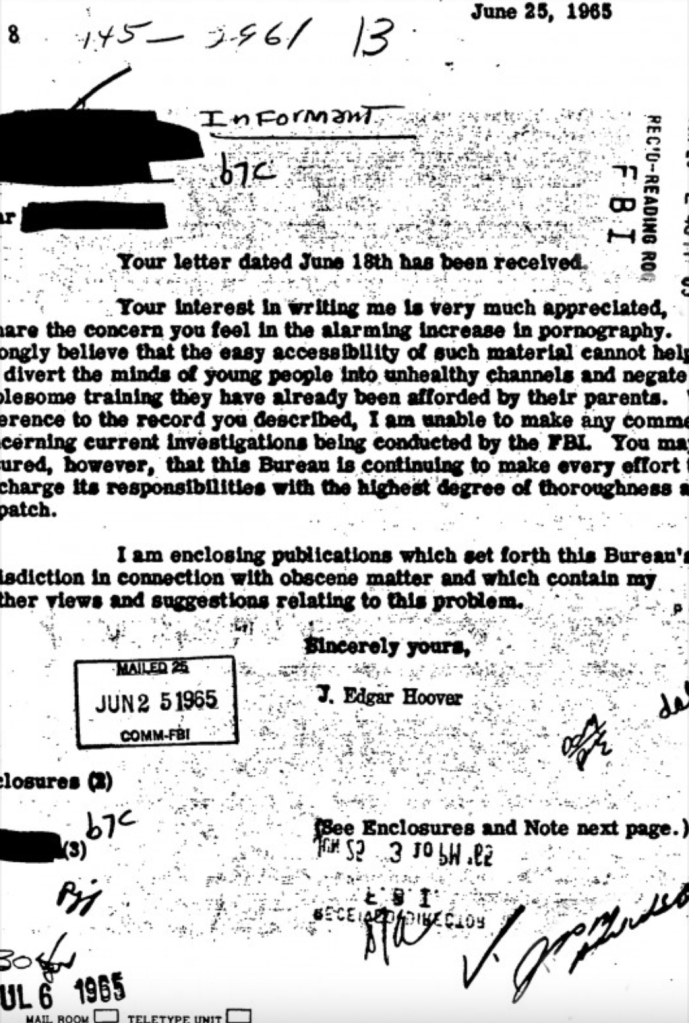
The Letter sent by FBI Director J. Edgar Hoover responded to claims that “Louie Louie” was obscene. Was this really the most pressing thing the FBI needed to investigate?
Part V: Conclusion
“Louie Louie” has a legendary reputation. It’s a song anyone can play, and the garbled nature of the lyrics means that one can make up their own lyrics. There are whole albums that just consist of different versions of the song by wildly different artists. You can hear it at sports games, or in diners, it pops its head up basically everywhere. There was even an attempt to declare “Louie Louie” the state song of Washington. Even though this didn’t happen, it shows that there is still an appetite for the song. “Louie Louie” will truly live on forever.
 KUPS "The Sound"

Leave a comment