
By Tate DeCarlo
Fiddlehead embraces shift in style with 2023 album release Death is Nothing to Us
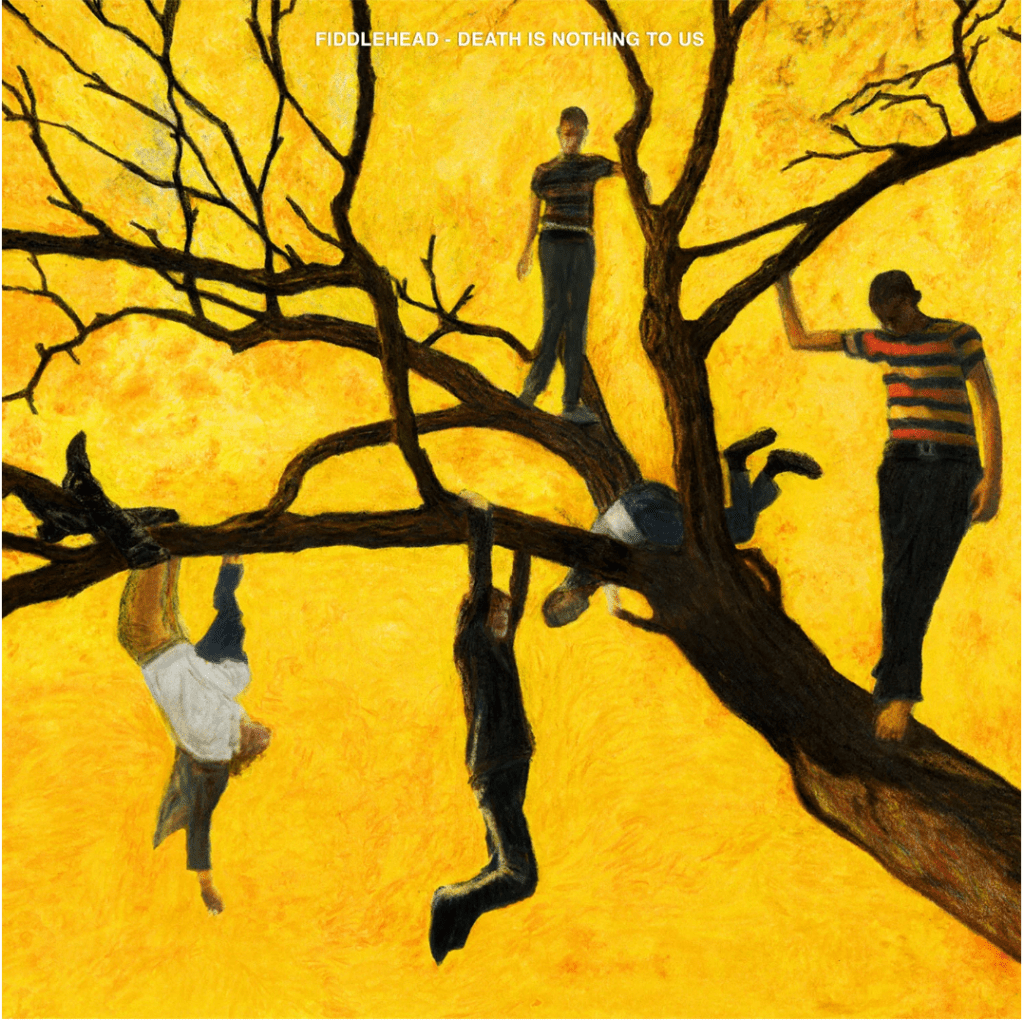
Post-hardcore allstars Fiddlehead, renown for their heart-wrenching, high energy sound, released the album Death is Nothing to Us this August. Building on the momentum of their 2021 release Between the Richness and 2018’s Springtime and Blind, this newest record feels like the culmination of a trilogy. Fiddlehead’s third album presents a shift both in style and in content; reimaging their approach to the expression of grief that initially inspired the band to begin producing music. Their first two records were driven by the passing of frontman Patrick Flynn’s father, Springtime and Blind first processing Flynn’s mother’s grief, and then his own in the following album Between the Richness. Now their third album, “Death is Nothing to Us” focuses less on introspection as the band turns their attention outward, commenting on the broader social relationship with loss and mental health.
Comprised of heavy-hitting hardcore punk veterans, the success of Fiddlehead’s first two albums is intrinsically related to the band’s expert musicianship. Vocals and drums are deftly handled by Patrick Flynn and Shawn Costa of the legendary hardcore outfit Have Heart. Guitar responsibilities are split between Alex Henery of British rock group Basement and Alex Dow of Big Contest. The quintet is completed by Nick Hinsch of Nuclear Age on bass. Blooming from their punk roots, Fiddlehead blends melodic hardcore with raw anguish reminiscent of first-wave emo and technical post-punk creativity. Their unique sound is best characterized by roaring, looming guitar, tight, fill-heavy drums, anthemic choruses, creative lyricism and sampling from real-life recordings. Their new album, Death is Nothing to Us leans into their emo side, embracing slower tempos and repetitive, throbbing instrumentals.
Fiddlehead’s hardcore pedigree is apparent on the first track of Death is Nothing to Us. Listeners are dropped headfirst into the album with opener “The Deathlife,” kicked awake by a tidal wave of thick guitar alongside Shawn Costa’s punchy fills and crashing cymbals. This uptempo assault on the ears is classic Fiddlehead, reminiscent of their first two records as well as band members’ previous work.
The following track, “Sleepyhead,” begins with the same energy but quickly pumps the brakes and drops the intensity to explore a different, angstier sound. Flynn’s usual singing is replaced instead by a guttural croon, lamenting first his own experience with antidepressants but then transitioning from first to second person in his descriptions of depressive fatigue. The album’s theme begins to coagulate with this second track, as Flynn and Fiddlehead speak not only on their own struggles with mental health, but also give voice to a broader experience. Their deviation from a focus on personal grief comes with a slower, sullen, and pensive sound that oozes into “Loserman,”the following track, and is repeated elsewhere throughout the album on tracks like “Give It Time (II)” and “The Woes (feat. Kate-O-8).”
On many tracks, pounding instrumentation quiets for a softer chorus, making plenty of space for Flynn’s vocals to breathe, offering a subtler sonic bed over which they float. This ebb and flow of intensity is especially clear in “Welcome to the Situation” and “Fifteen to Infinity,” marked by a plodding pace that clears room for Flynn’s sung-rather-than-screamed bridges, allowing choruses to take charge. This feels different from previous Fiddlehead projects, both in its generalized lyrical content as well as the decrease in competition between Flynn’s vocals and the guitars of Henery, Dow, and Hinsch.
True to classic Fiddlehead form, however, it is impossible to categorize this album under one sound or style. Though maintaining a steady, emo undercurrent, Death is Nothing to Us retains the catchy songwriting and high points reminiscent of past projects. Flynn leans into anthemic choruses on songs like “Sullenboy,” “Queen of Limerick,” and “Fiddleheads,” which are supported by pop-punk-esque guitar flourishes. Placed between the aforementioned slower tracks, these cautiously optimistic earworms give the album a wider sonic breadth and texture.
The fourth track of the album was especially standout, both for its big-name feature and creative instrumentation. “True Hardcore (II) [feat. Justice Tripp]” adds additional hardcore royalty to the already star-studded Fiddlehead five in the form of massively influential Trapped Under Ice frontman Justice Tripp. The song opens with a sturdy baseline, over which bouncing guitar harmonies are woven. The track boils over with rollicking energy, topped by call-and-response vocal layering –the combination of Flynn and Tripp’s talents. The song title has a humorous intentional irony to it as well; though it has been composed by hardcore punk legends, it does not fit within the sonic distinctions of the genre, yet it proclaims to be “true hardcore.” This song is a personal album favorite for sure, a nod to band members’ past performances and perhaps an optimistic look to the future as genre boundaries blend and redefine themselves.
The culmination of Death is Nothing to Us comes with the same intensity as the album’s opener; The final track “Going to Die” is a high-speed, drum driven romp that leaves the listener smiling despite the emotional heft of the album’s lyrical content. Though this track speaks directly to the loss of Flynn’s father and the suicide of friends, the chorus “See you on the other side” doesn’t feel like a dismal goodbye. Instead, this track feels like a celebration of time spent. Flynn and band members simultaneously thank those they’ve lost for shared memories and thank listeners for lending their ear to the album itself.
Though this album delivers consistently enjoyable songs, it feels lacking the magic that has made previous Fiddlehead projects so memorable. For one, the absence of sampling and recorded interludes over sludgy instrumentals is striking, given that the technique feels quintessential to the production of Fiddlehead’s unique sound. Answering machine recordings and audio from home videos of family members interspersed in both Springtime and Blind (see “4/17/70”) and Between the Richness (see “Life Notice”) added sonic texture and visceral depth that made these albums even more compelling. Without them, Death is Nothing to Us feels both more flat and less Fiddlehead. It makes sense that such recordings may not have been included given the different context of their newest album, but the lack of such a band-defining cue makes this album feel somewhat distant.
This distance between band and listener is exacerbated by the generality with which depression is discussed in this album. In previous records, Flynn’s lyrics were vulnerable and poetic, not simply labeling his feelings but describing them with thorough imagery in order to form complete symbolic motifs. Death is Nothing to Us turns away from this style, and though personal experience is still discussed, it feels like an entry point rather than the point itself. Perhaps intended to make the content of this album feel more relatable, the turn away from flowery lyricism instead serves to lessen the depth with which actual emotions are conveyed. Instead of immersion in and communication of mental health challenges, lyrics regarding depression throughout this album feel clinical and broad. In fact, the constant repetition of the word depression itself is repeated explicitly, – “Deeply depressed kids” in “True Hardcore (II) [feat. Justice Tripp],” “Old man’s depressed “ in “Welcome to the Situation,” and “Depressive Irish genes may have me breathing dismal poems” in “Sullenboy,” to name a few– almost undermines its intent, acting more as a buzzword than one that prompts interpersonal resonation.
While this album may not have the same intense impact as its predecessors, Death is Nothing to Us by Fiddlehead is an exciting and detailed project that captures the attention of the listener and brings them along the recent steps of Flynn’s grieving process. It is demonstrative of the bands’ growth over the last few years and it is heartening to listen to them explore different means of sonic expression. With this record, Fiddlehead continues to increase the accessibility of hardcore and emo sound through their indie rock spin, which feels aligned with current musical trends. The intent of this album to bring conversations about mental health to the forefront of art and media is admirable, and Fiddlehead continue to use their platform and talent to share an honest perspective on coping with loss. Coupled with their musical creativity and catchy, compelling instrumentation, Flynn’s vocals and message continue to cement Fiddlehead as a frontrunner in the post-hardcore scene.
 KUPS "The Sound"
Leave a comment